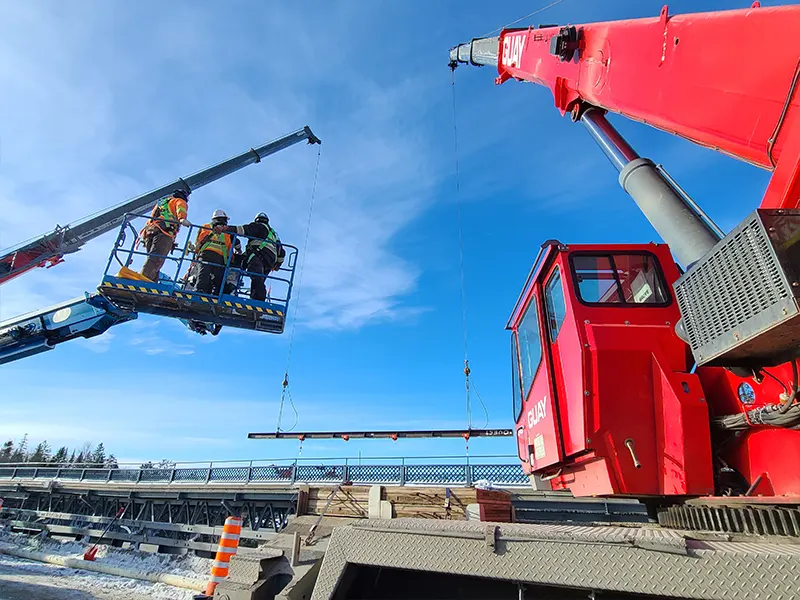
Fall arrest or travel restraint
The choice between fall arrest and travel restraint governs everything that follows. Under travel restraint, the worker physically cannot reach the edge: forces stay low and the anchor is straightforward to size. Under fall arrest, the energy of an actual fall has to be absorbed.
Fall distance and clearance
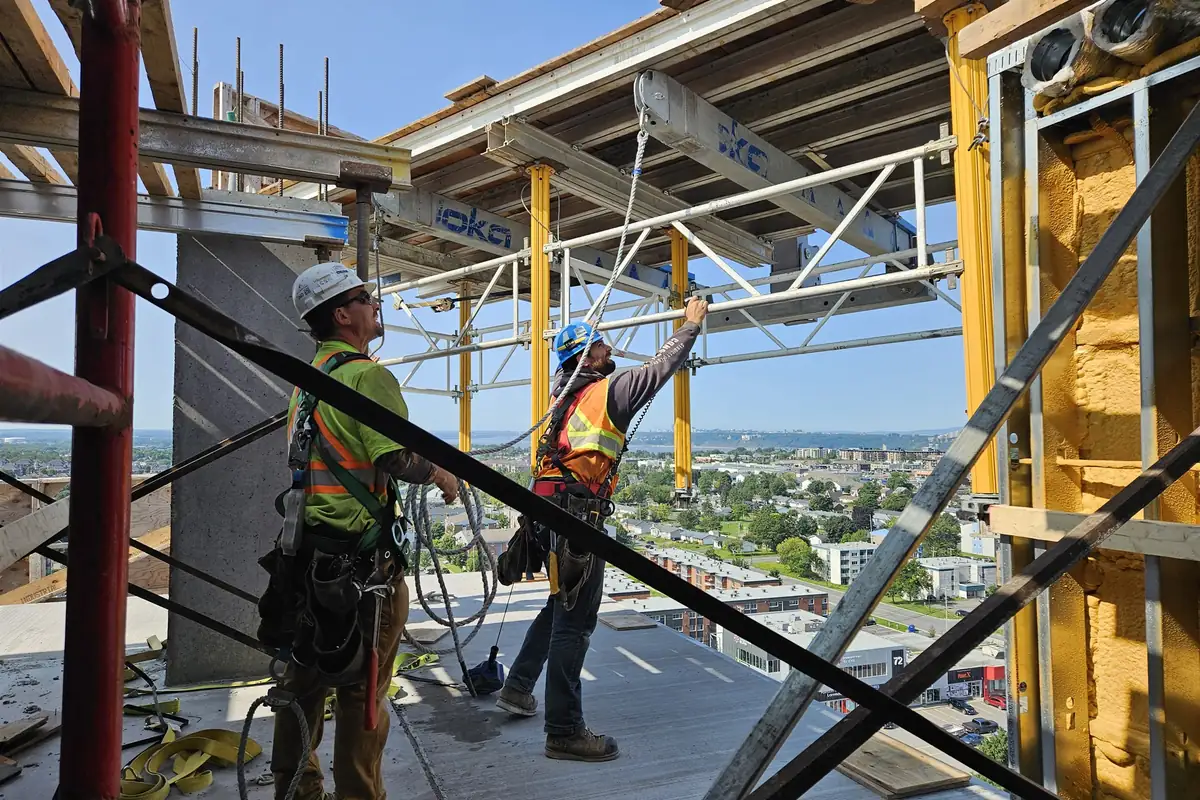
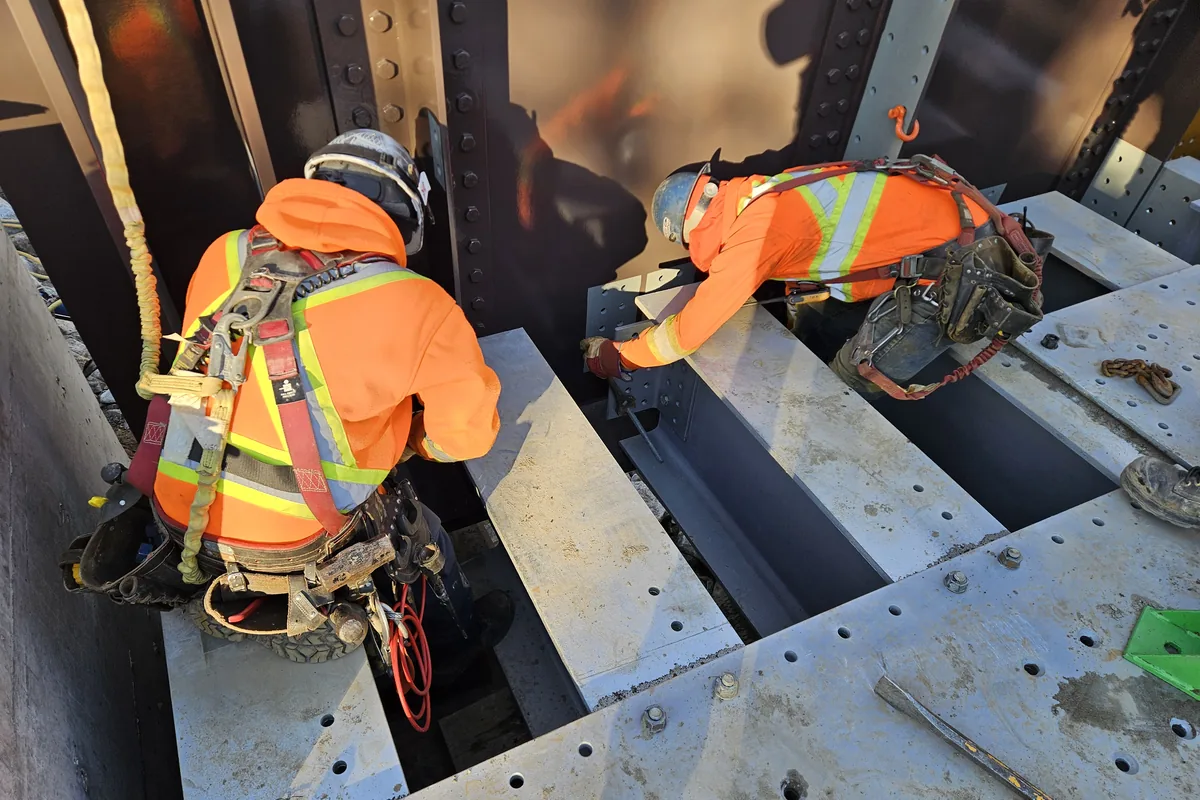
Under fall arrest, the fall-distance analysis becomes the centrepiece: length of the connecting subsystem, energy-absorber elongation, sag of the line and the clearance actually available below the worker. A flexible line is economical but deflects under load, which adds to the fall distance; a rigid line costs more and barely moves.
Anchors and supporting structure
In both cases, most of the work is in the anchor and in the structure that receives it. That is where the forces end up, and it is the part designed around the structure rather than out of a catalogue.