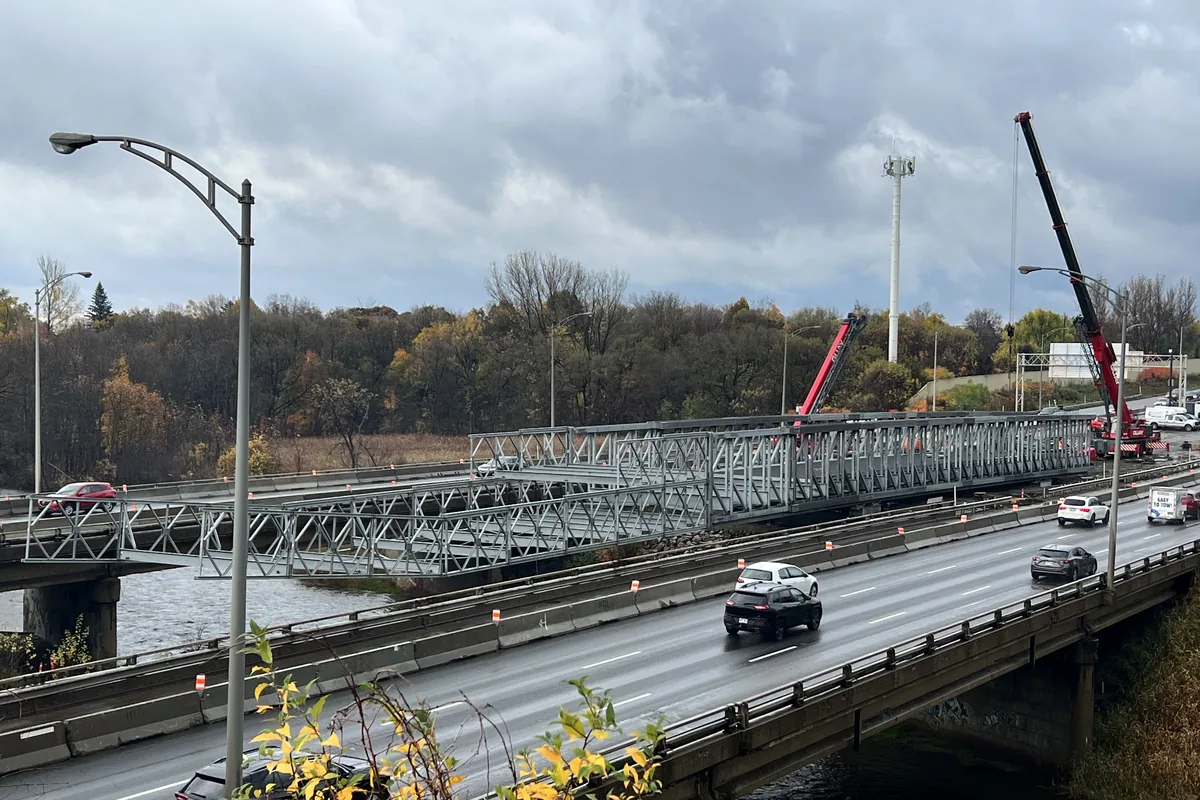
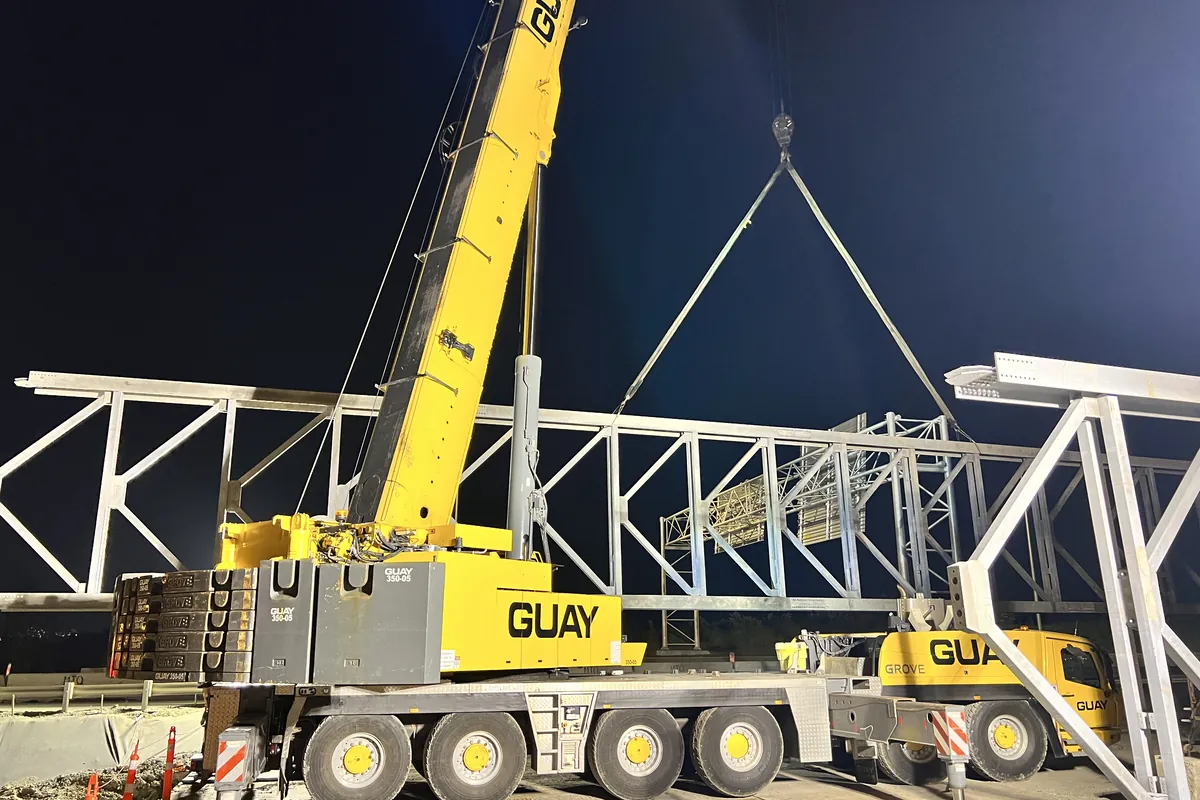
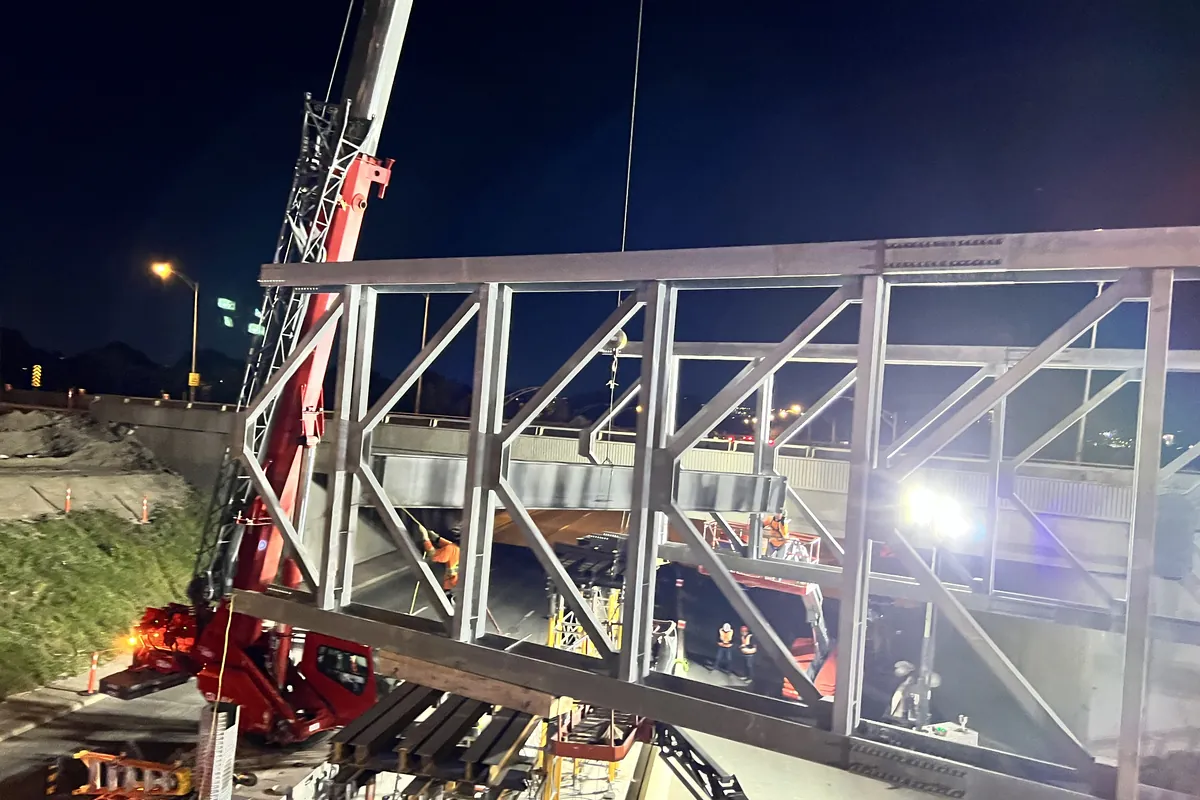
• Pont temporaire à treillis déposé à la grue mobile de nuit, autoroute 40
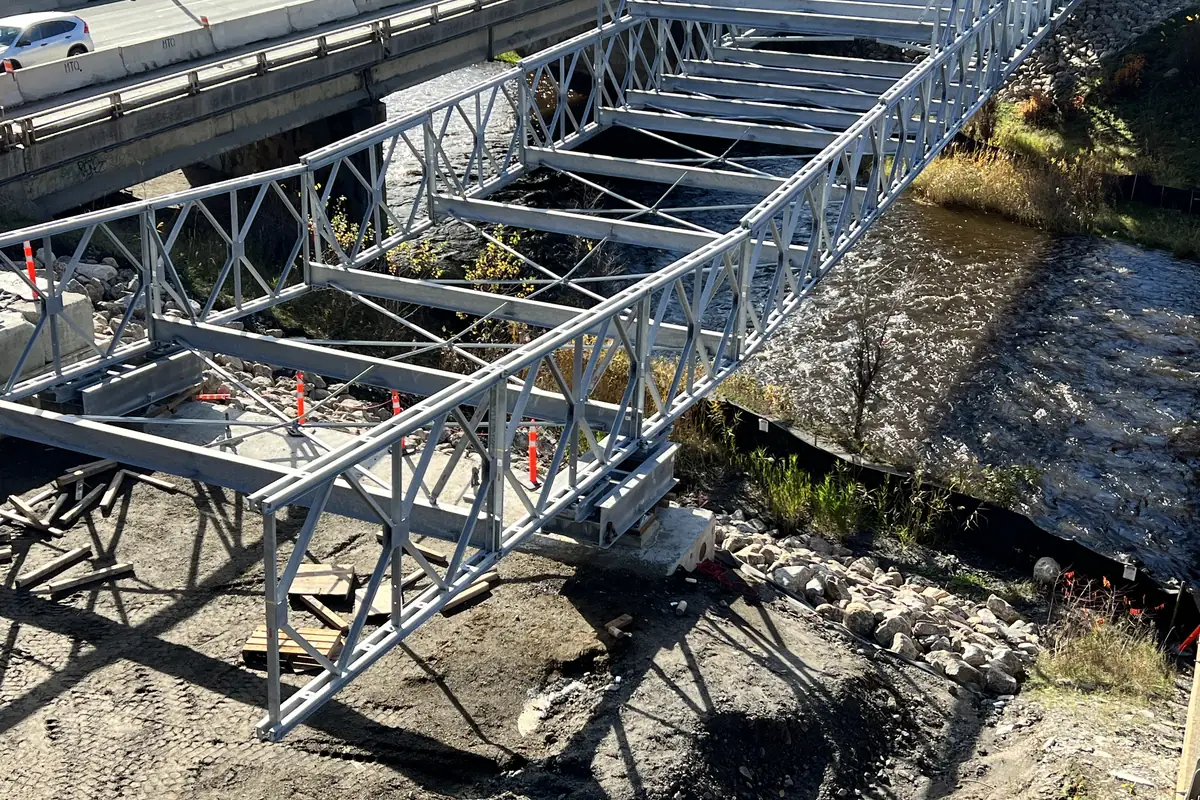
  • Pont temporaire à treillis reposant sur ses appuis temporaires

Temporary Bridge Design

Keeping a road link open while the permanent structure is built or demolished. Span, load class and service life drive the choice between a rented steel structure, an assembly built from existing components, or a bridge designed for the site. Then come the supports: temporary abutments, intermediate bents, and the bearing capacity of the ground beneath them.

  • Temporary abutments and supports
  • Rented, assembled or purpose-designed structures
  • Bearing capacity verification of the supports

Bridge Launching

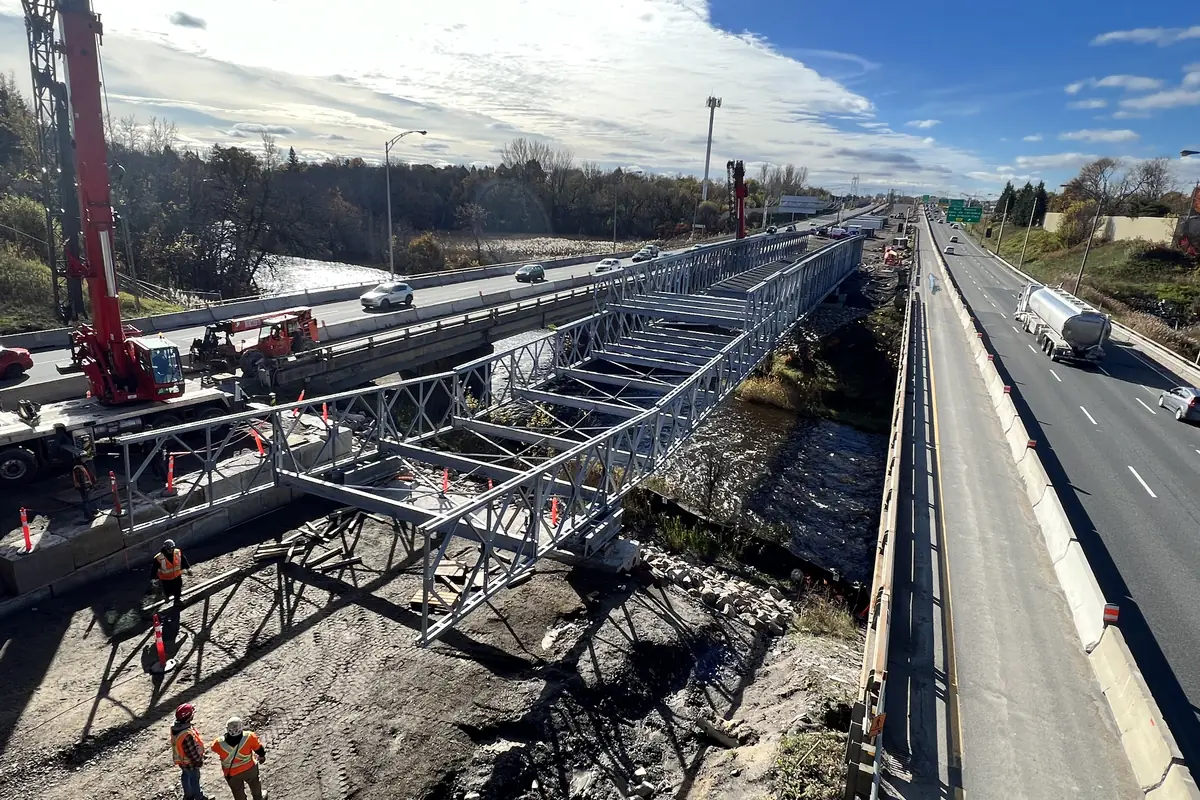
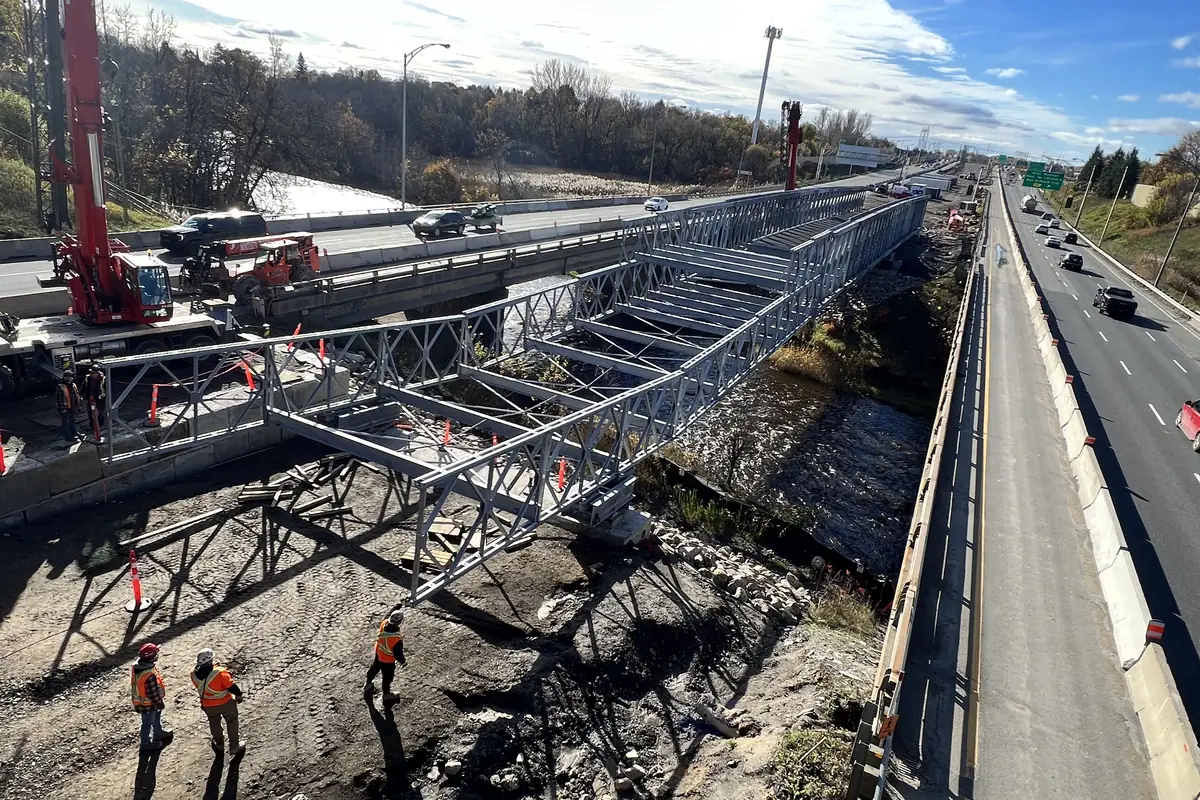
When the site leaves no room for a crane under the span — a watercourse, a rail line, a highway in service — the deck is pushed out from the abutment. The method turns on the support reactions at every stage of the push, on the launching rollers, and on the deflection of the cantilevered nose. We provide the full sequence and the site follow-up.
  • Launching method and sequence
  • Launching rollers and lateral guidance
  • Monitoring of reactions and movements
  • Tablier de pont temporaire poussé au-dessus de la rivière, avant-bec en porte-à-faux
  • Avancement du tablier de pont temporaire pendant la poussée, équipe en chantier
  • Appuis de roulement et guidage latéral sous le tablier pendant le lancement
  • Pont temporaire à treillis en place sur ses appuis après le lancement
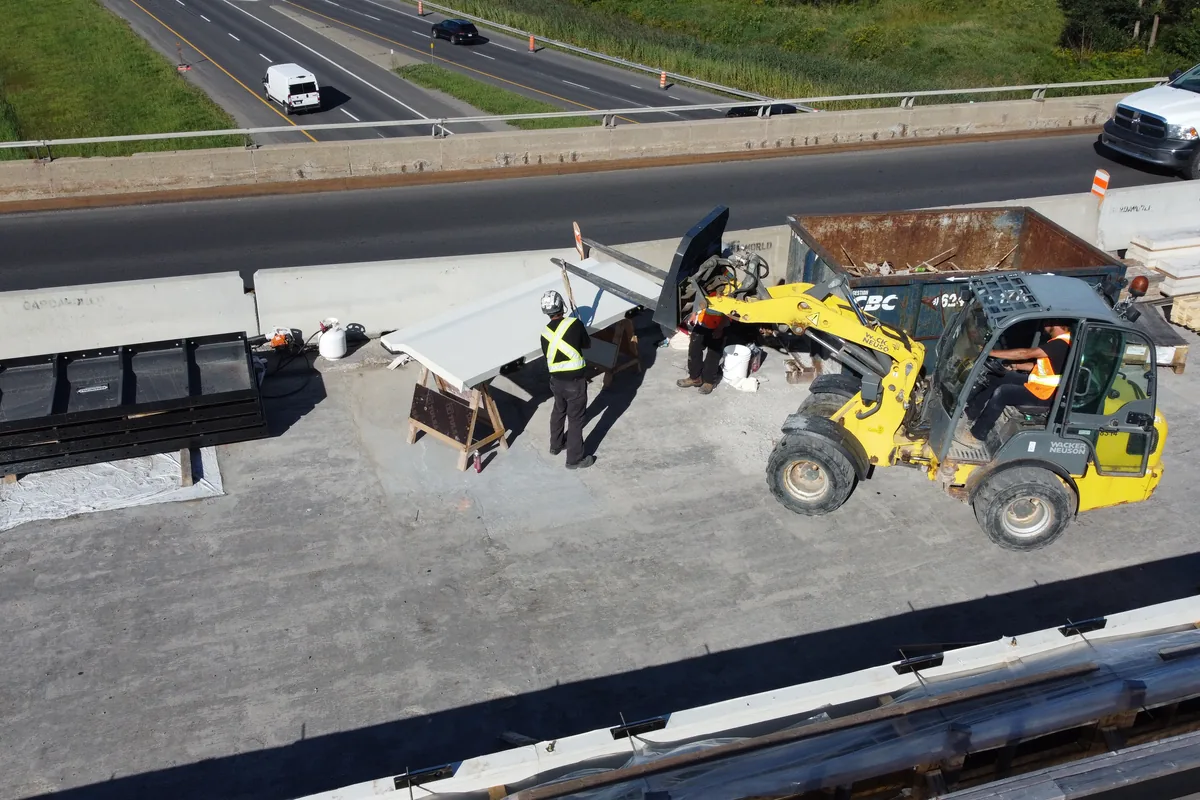
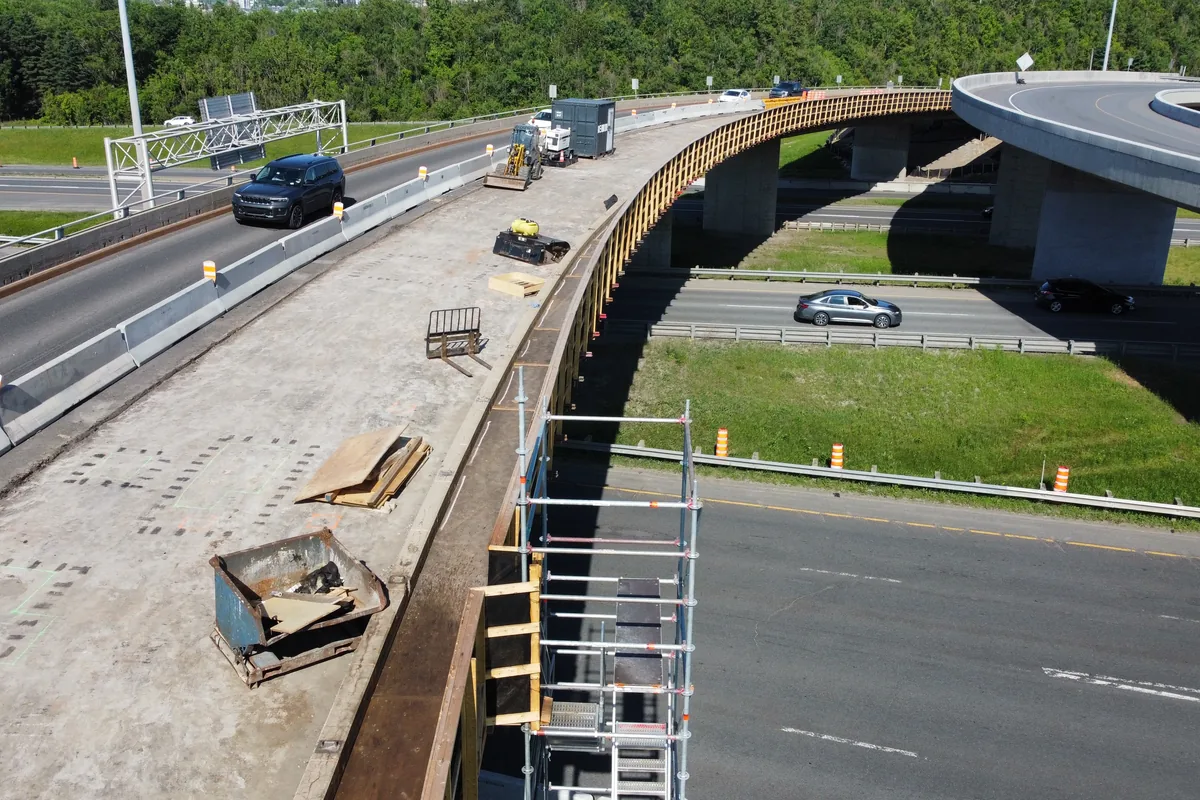
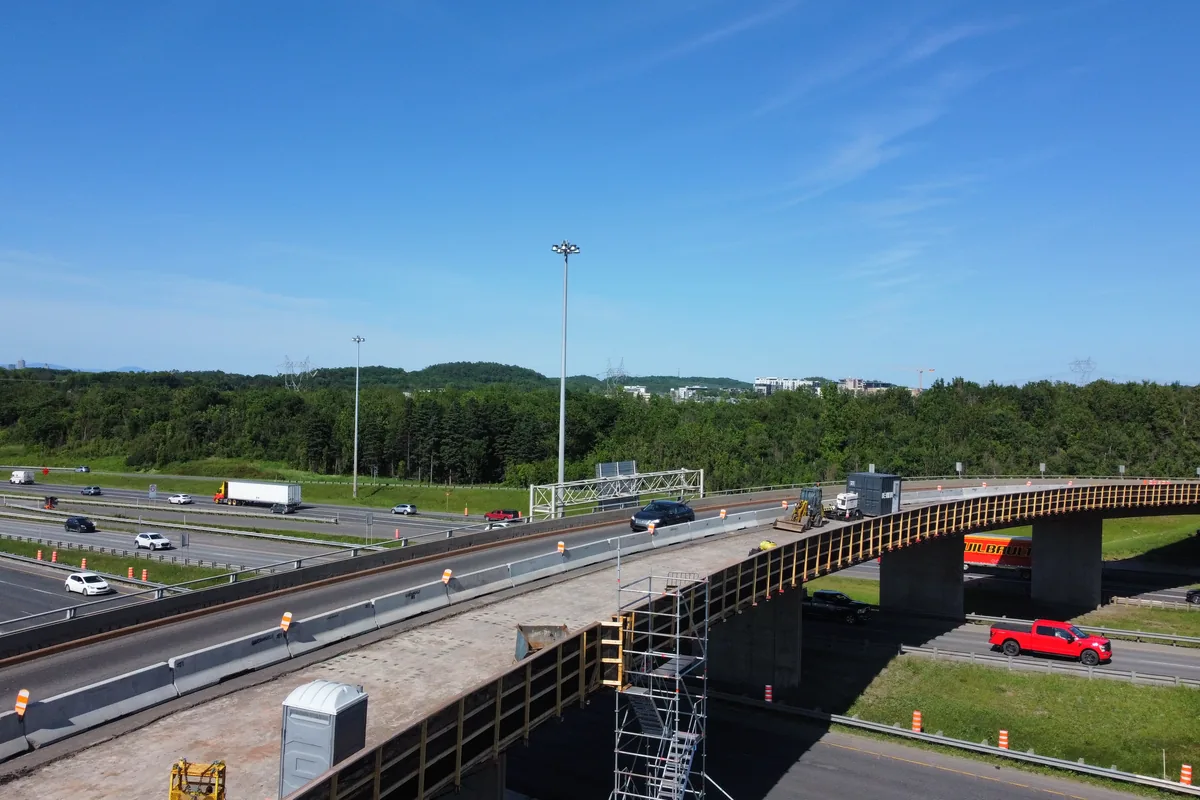
  • Chargeuse compacte et matériaux de construction circulant sur le tablier d’un ouvrage en service
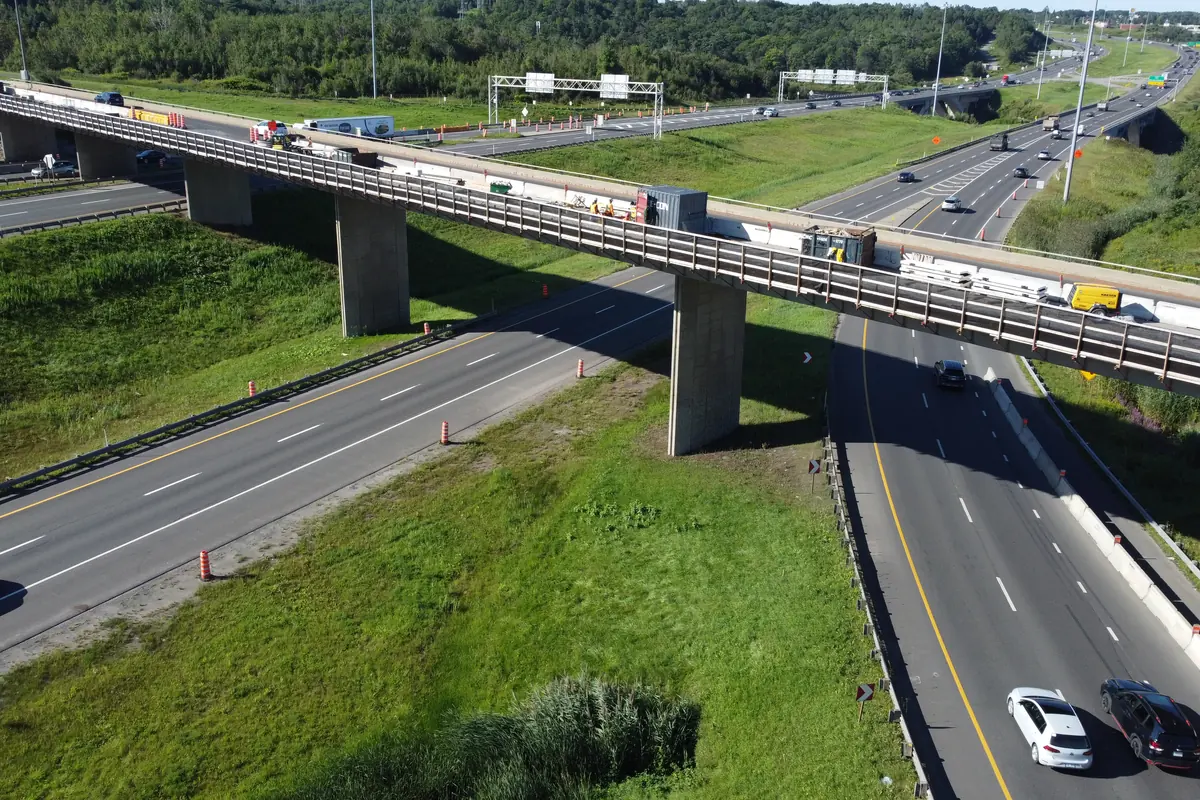
  • Conteneur, machinerie et matériaux sur le tablier d’un viaduc, circulation maintenue en dessous
  • Équipement et matériaux entreposés sur le tablier d’une bretelle pendant les travaux
  • Vue aérienne d’une bretelle en travaux avec équipement sur le tablier

Construction Overload Analysis on an Existing Bridge

Running a crane, a heavy hauler or a convoy over a structure that was never designed for those loads. The analysis compares the induced forces to the real capacity of the structure in place and sets, where needed, the position, speed and distribution restrictions that make the crossing acceptable.

  • Capacity verification under construction loading
  • Traffic restrictions and load distribution plan
  • Crane positioning on an existing structure