Lift plan

A lift plan is more than picking a crane. Load, radius, boom configuration and counterweight are set together, then verified position by position: crane assembly, rotation, initial position and final position. Every position has its own reactions.
  • Selection of the crane and boom configuration
  • Verification position by position — assembly, rotation, initial and final positions
  • Reactions transmitted for each working position
  • Weight, geometry and lifting points of the load
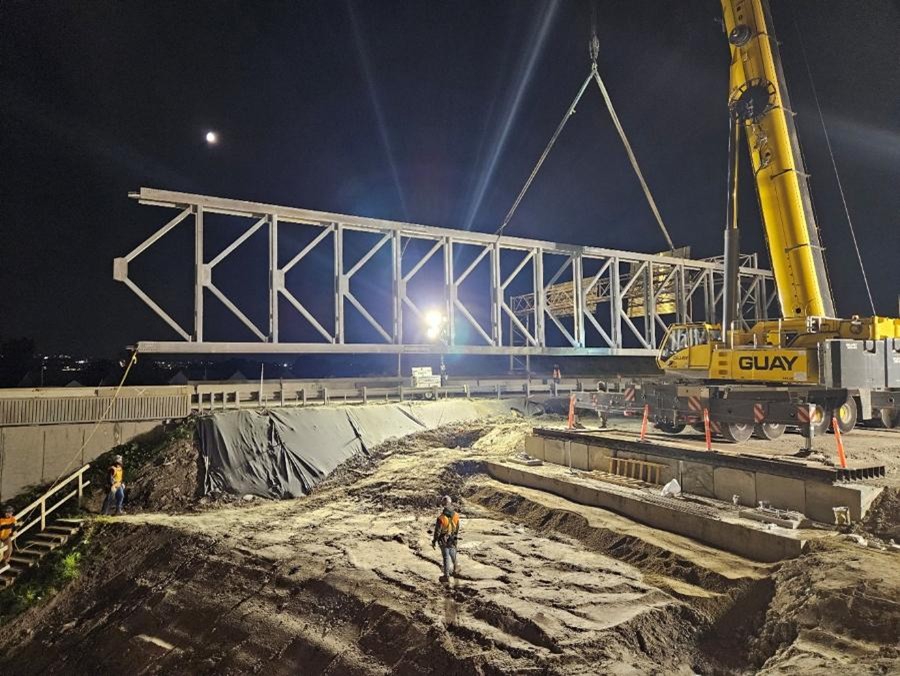
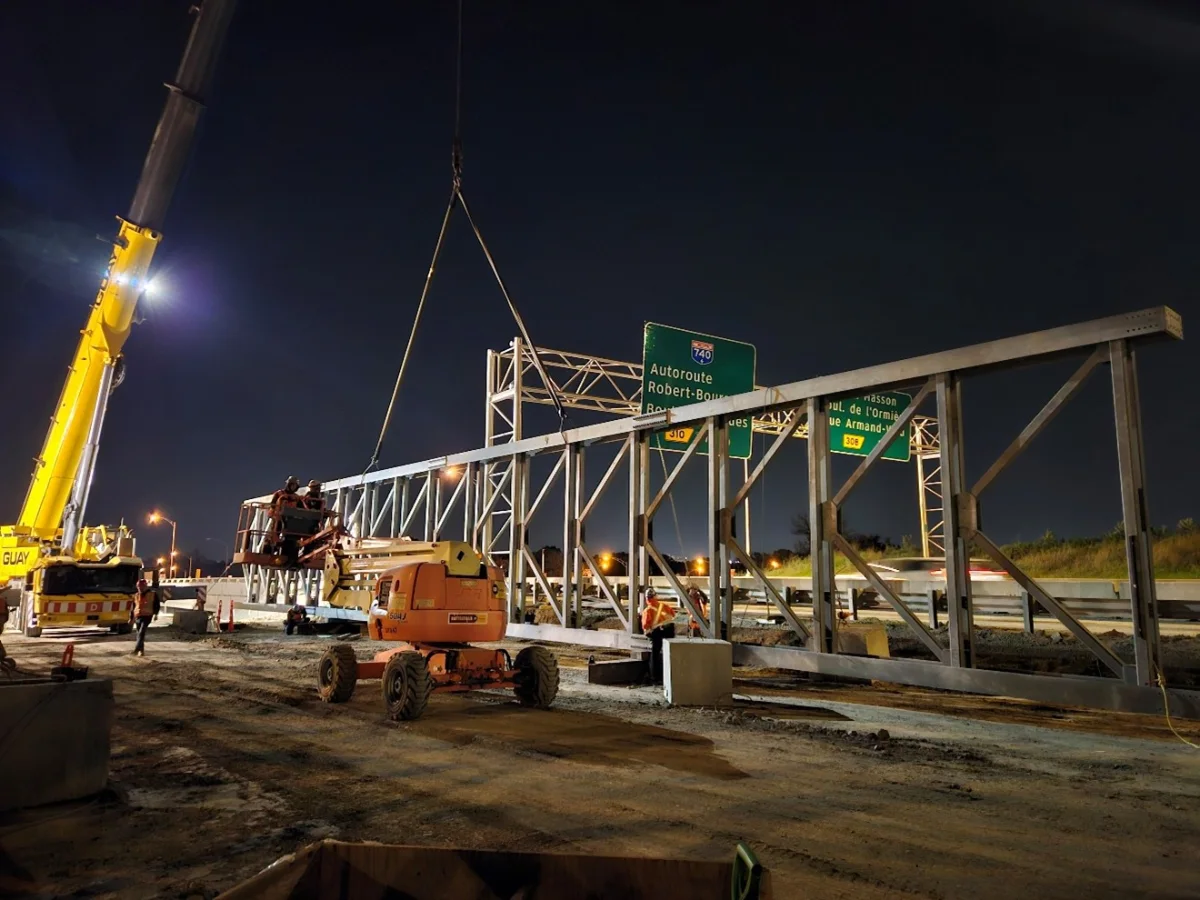
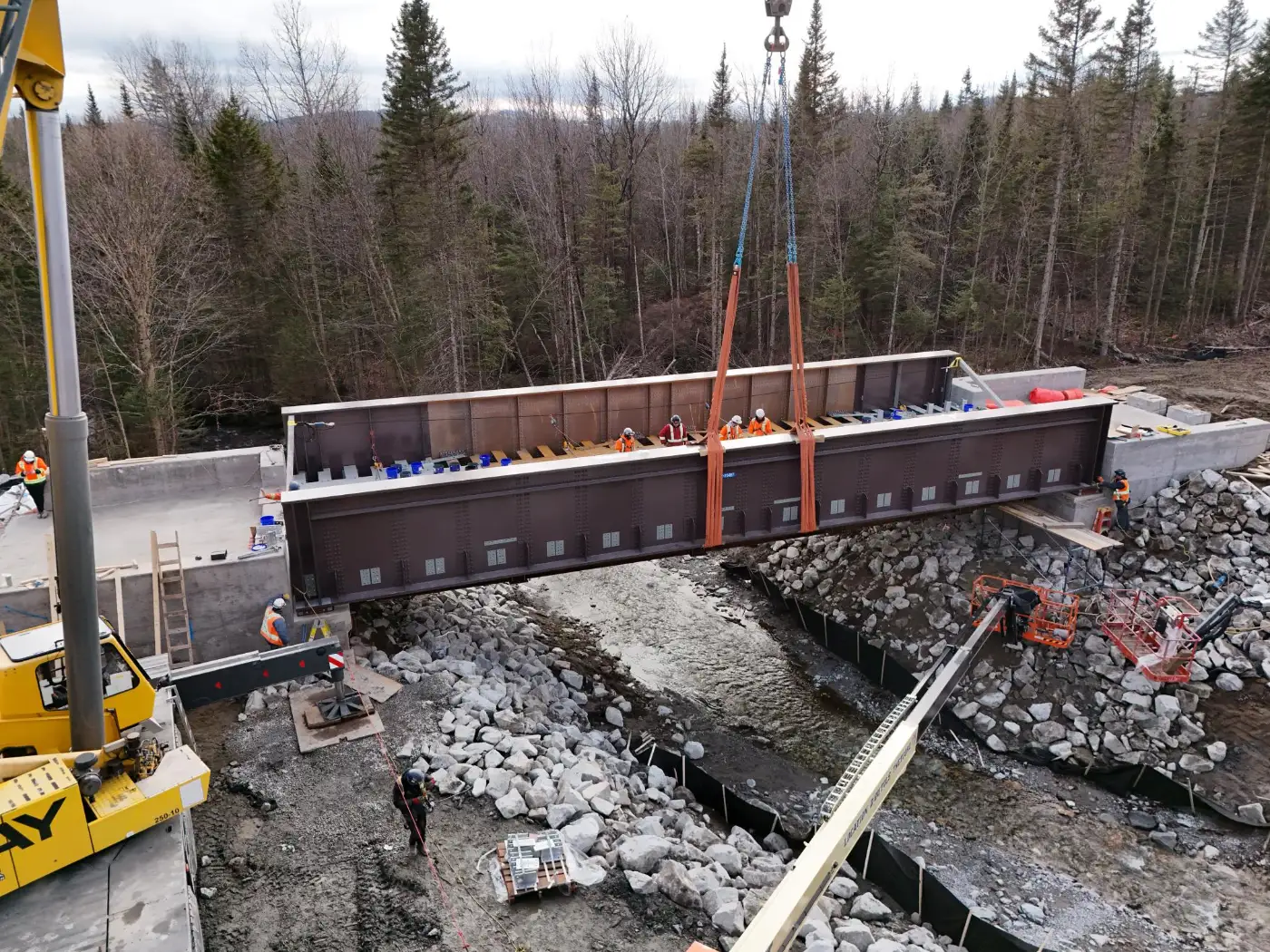
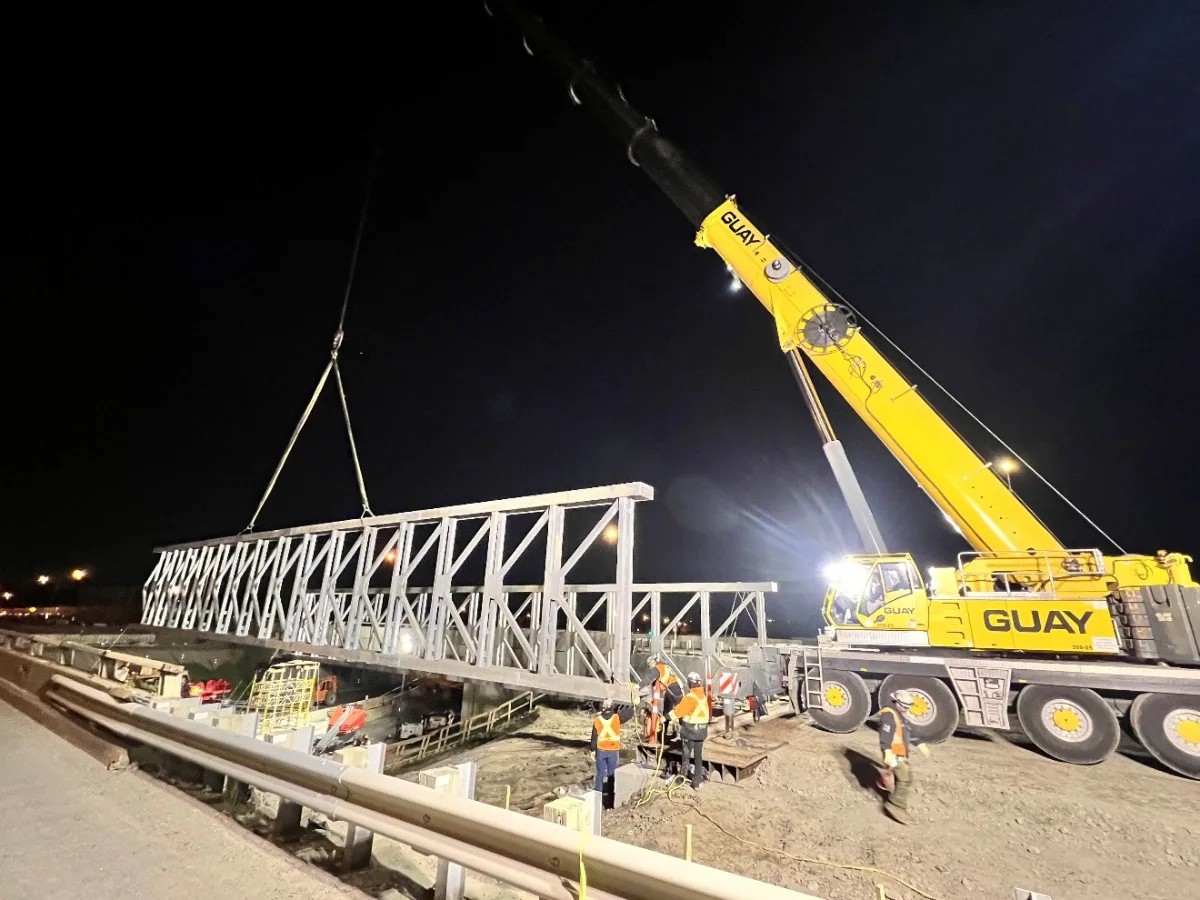
  • Mobile crane set up for lifting — A40 Masson
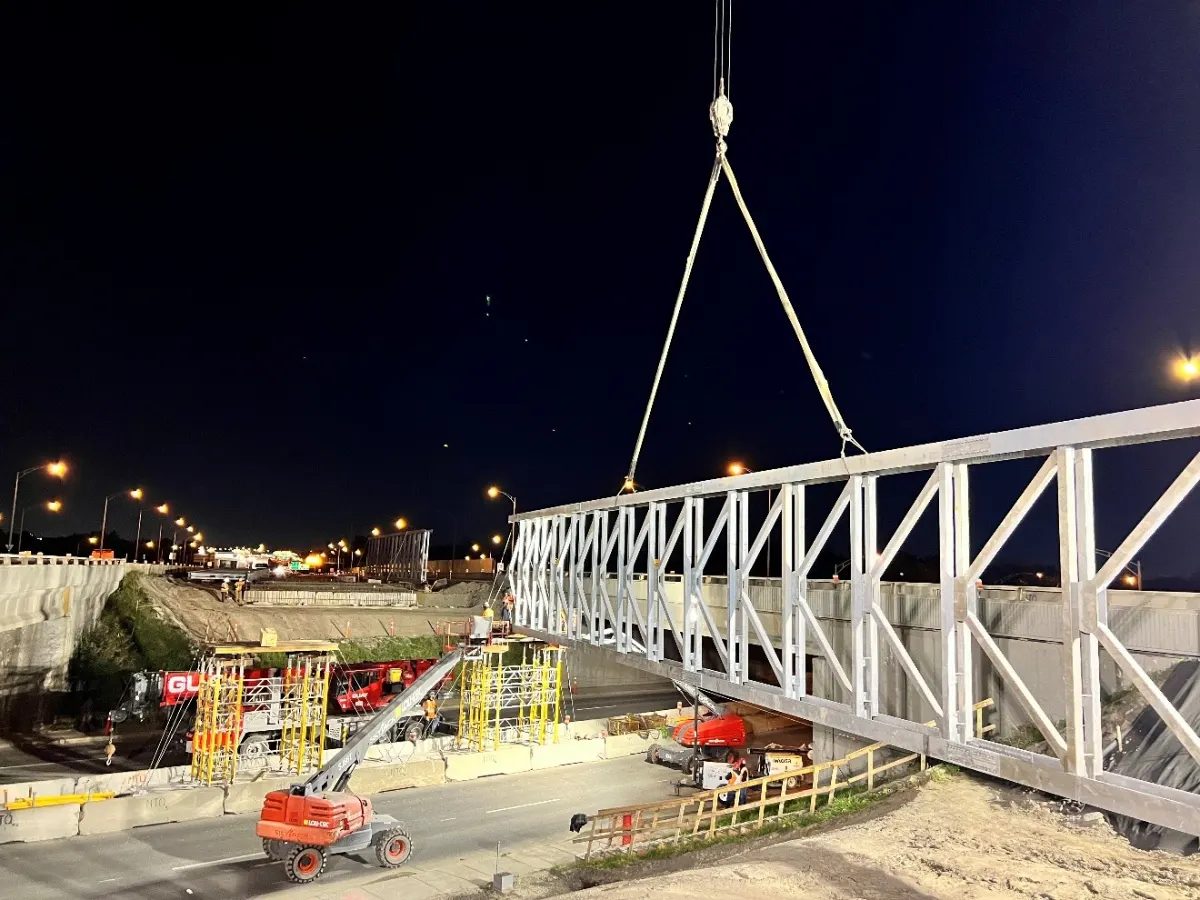
  • Mobile crane lift — A40 Masson
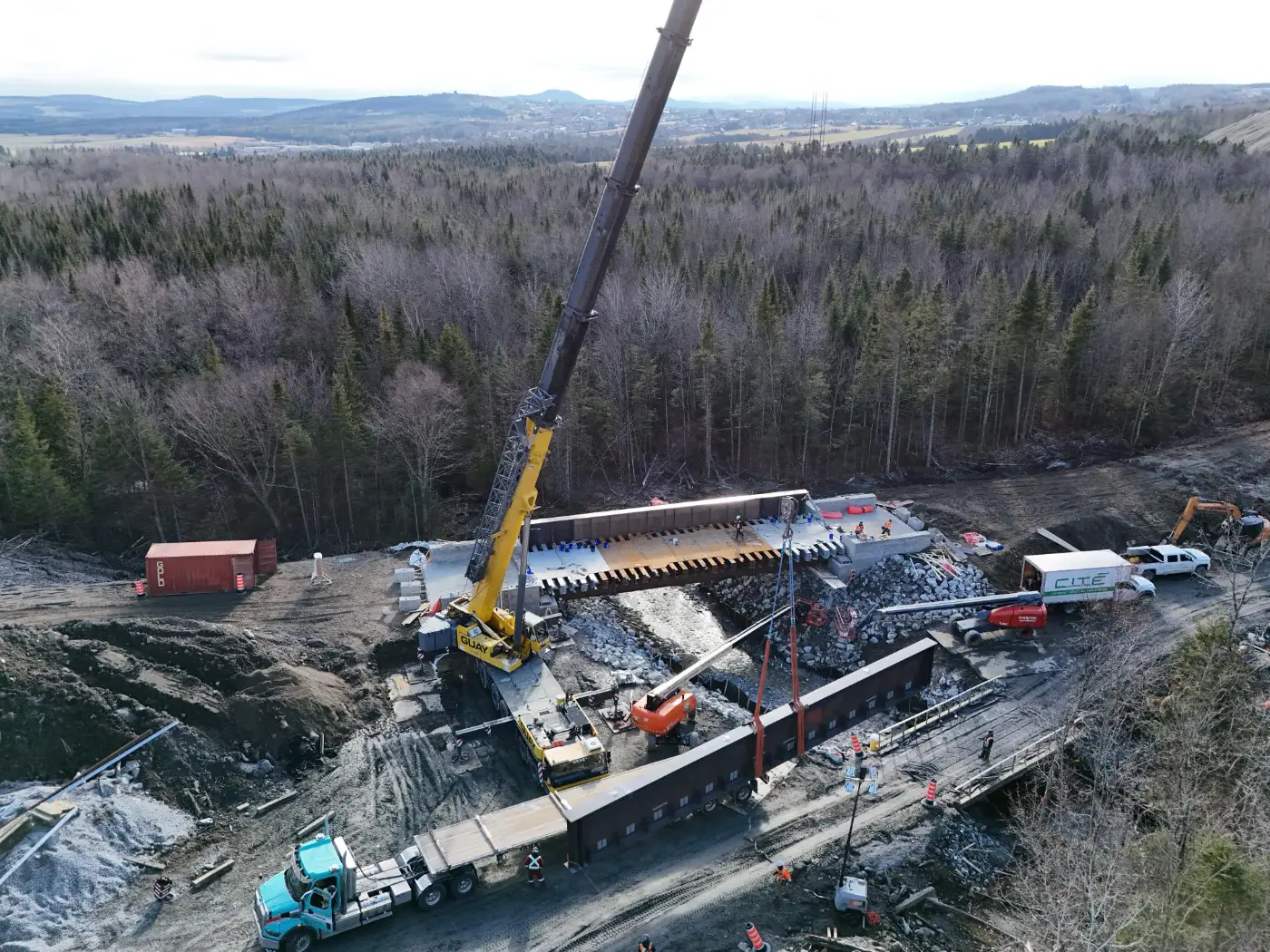
  • Lifting a railway bridge girder with a mobile crane

Crane support

It is often the ground, not the crane, that governs. Bearing capacity under the outriggers is verified and the spreader mats are sized. Where the crane bears on an existing structure — a slab, a deck, a buried structure — the reactions transmitted to that structure become the governing criterion.

  • Bearing capacity under outriggers
  • Sizing of outrigger spreader mats
  • Crane bearing on an existing structure: verification of the supporting structure
  • Work near excavations and buried structures

Non-standard lifts

Some manoeuvres fall outside the simple case: two cranes working together, travelling with a suspended load, restricted clearance. The sequence is then defined with the same rigour as the capacity.
  • Tandem lifts and multi-crane sequencing
  • Pick-and-carry lifts
  • Lifting in confined space or under restricted clearance
  • Lifting with a luffing jib
  • Rigging accessories and attachment points
  • Setting girders with a mobile crane — railway bridge
  • Mobile crane lifting manoeuvre — A40 Masson