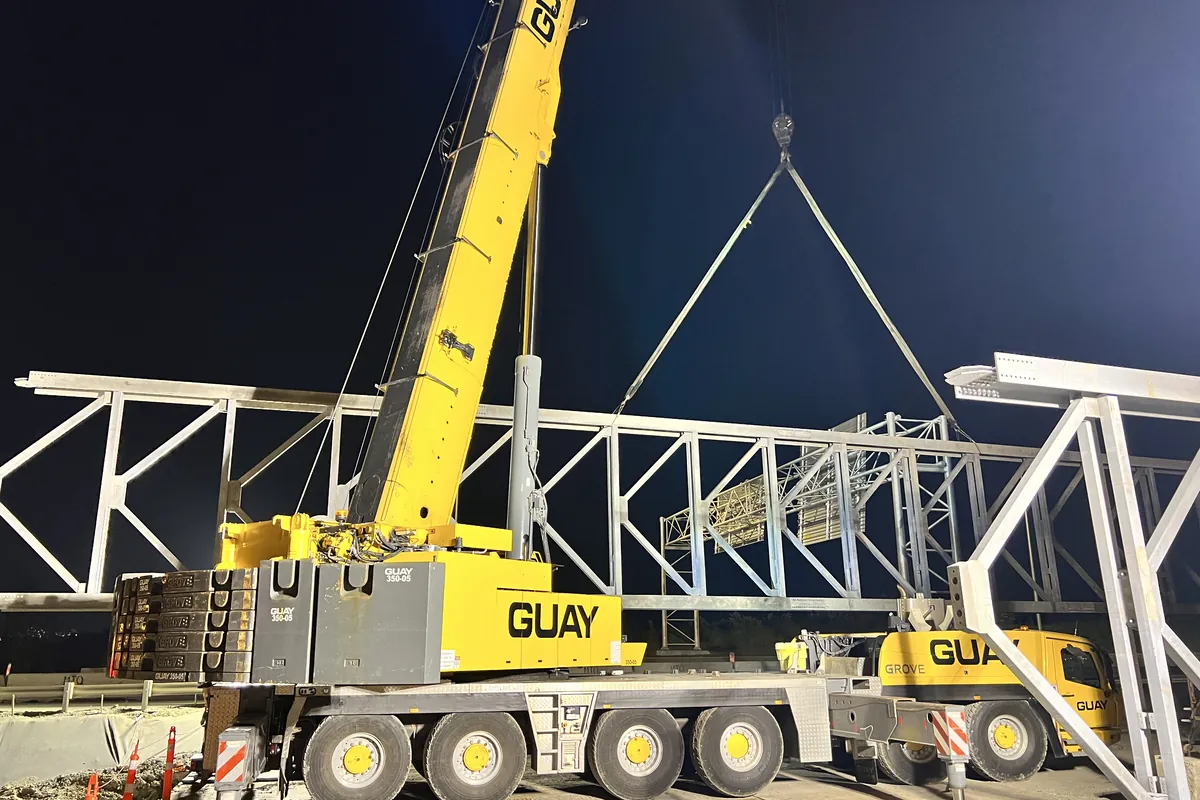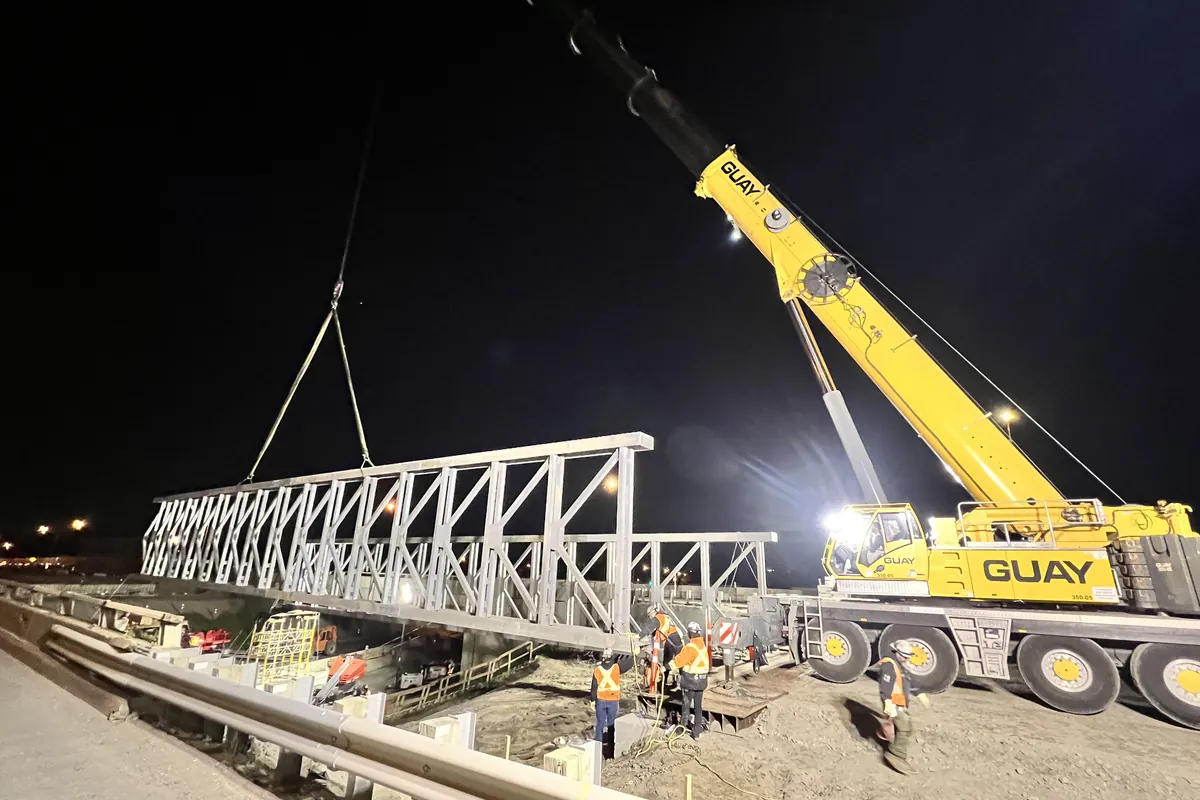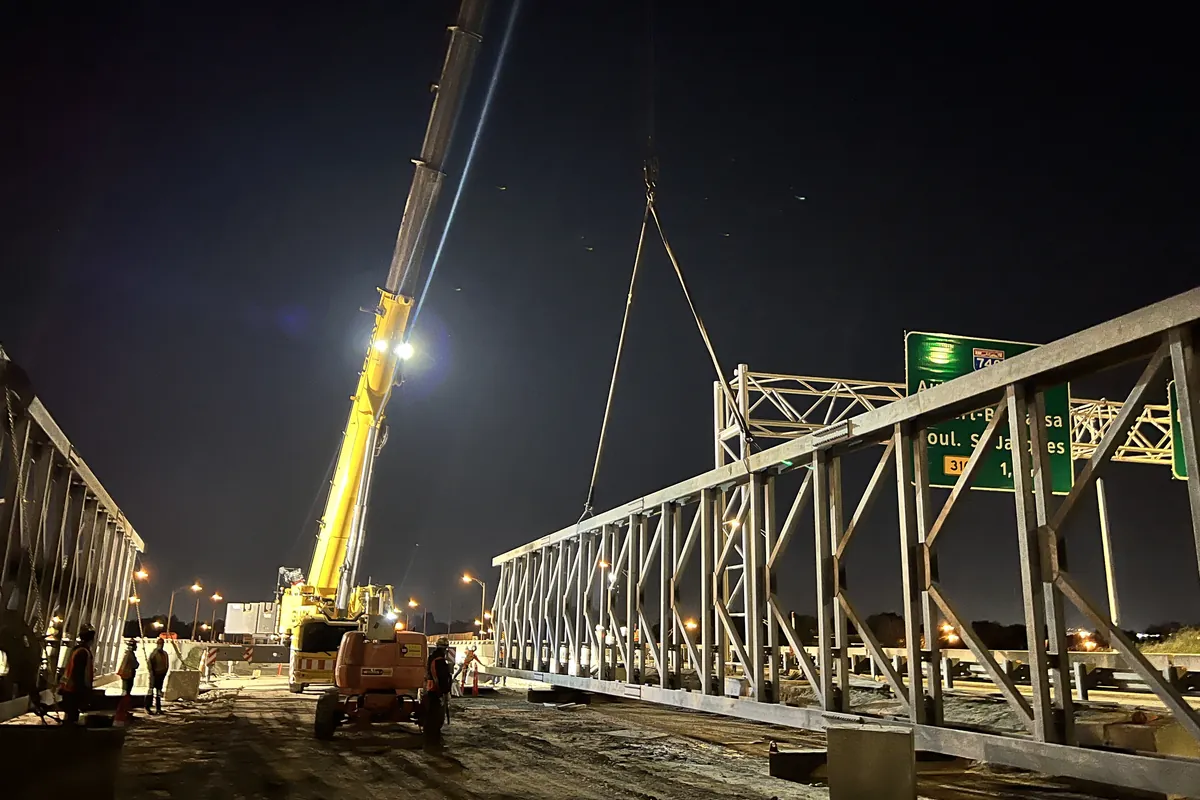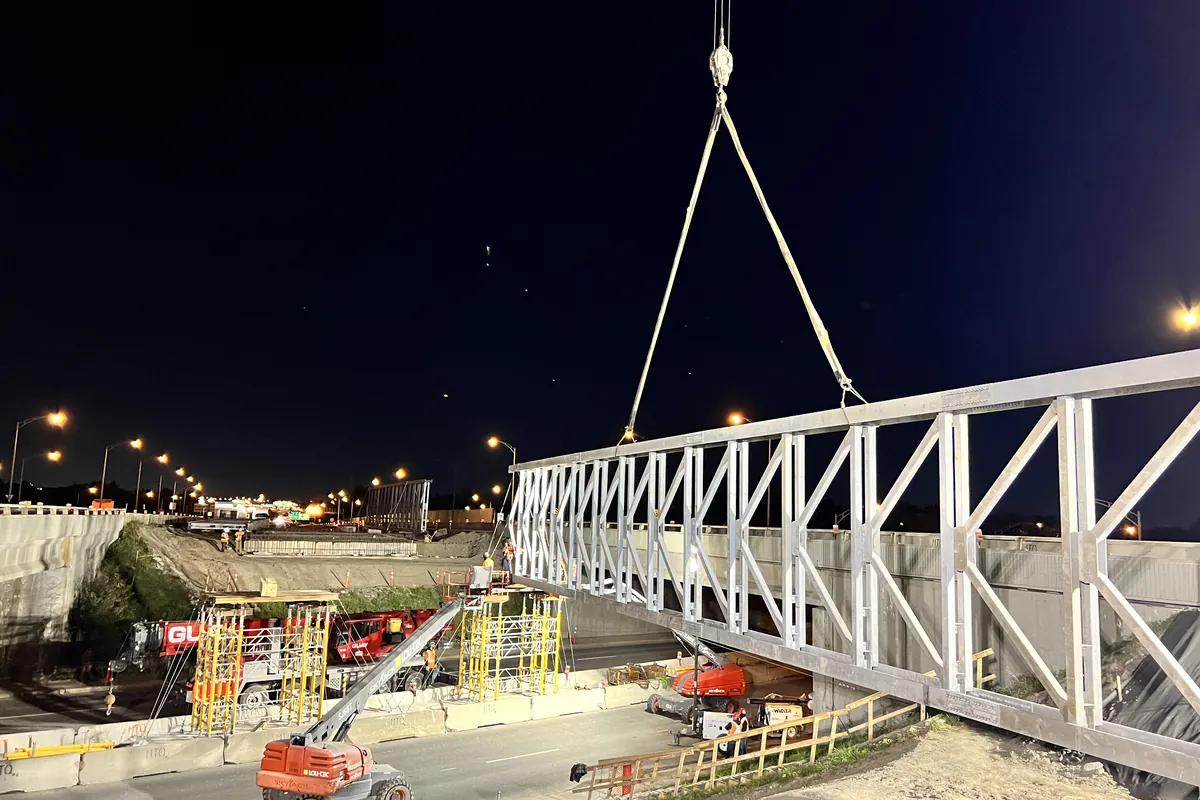
Highway 40 bridges site
The challenge
Two decks to install on a highway in service, by two different methods.
Launching makes the bearing reactions travel as the deck advances: the structure works as a cantilever during the push and takes forces it will never see again in service. A crane lift, by contrast, happens in a single operation. The main challenge was to select for each structure the method its site allowed, then to demonstrate its feasibility at every stage of installation.
Main services provided
Bridge launching — Design of the launching method for the first deck and of the pushing supports, with verification of reactions and of forces in the deck at each stage of the advance.
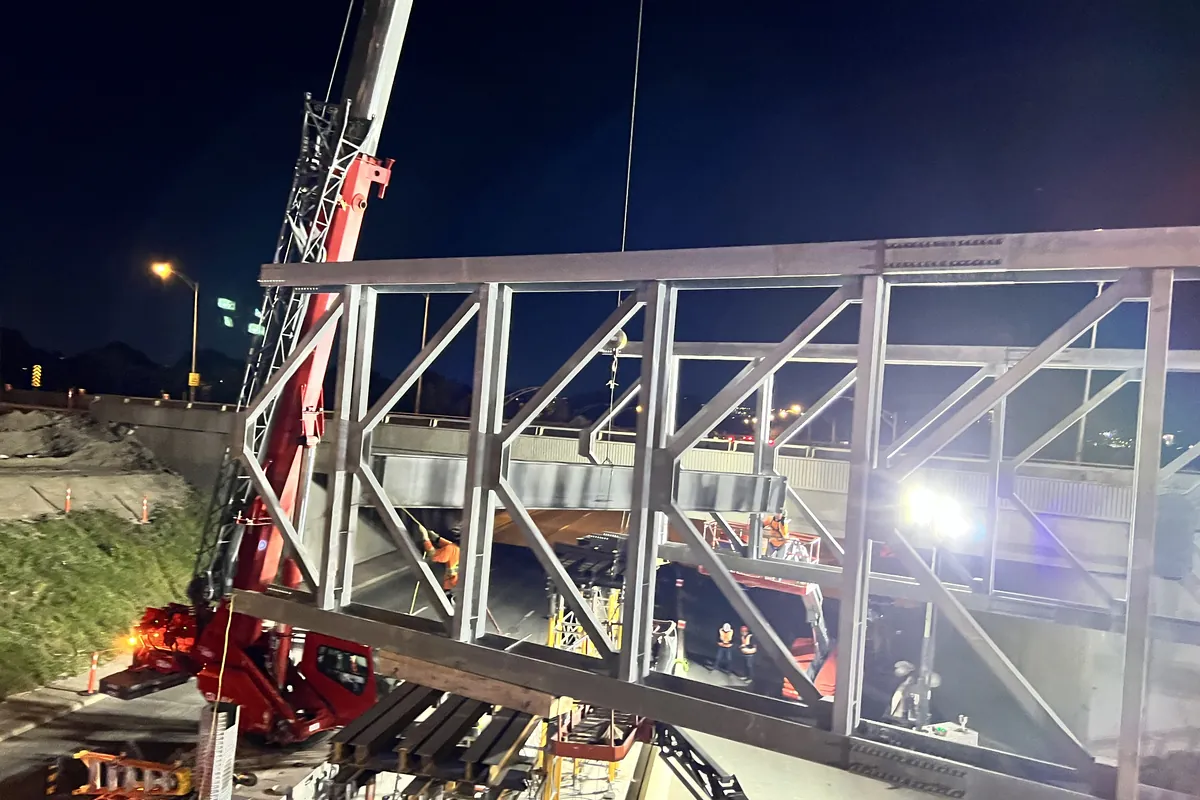
Mobile crane lift — Lift plan for the second deck, set down in one piece: configuration selection, verification of bearing capacity under the outriggers and manoeuvre sequence.
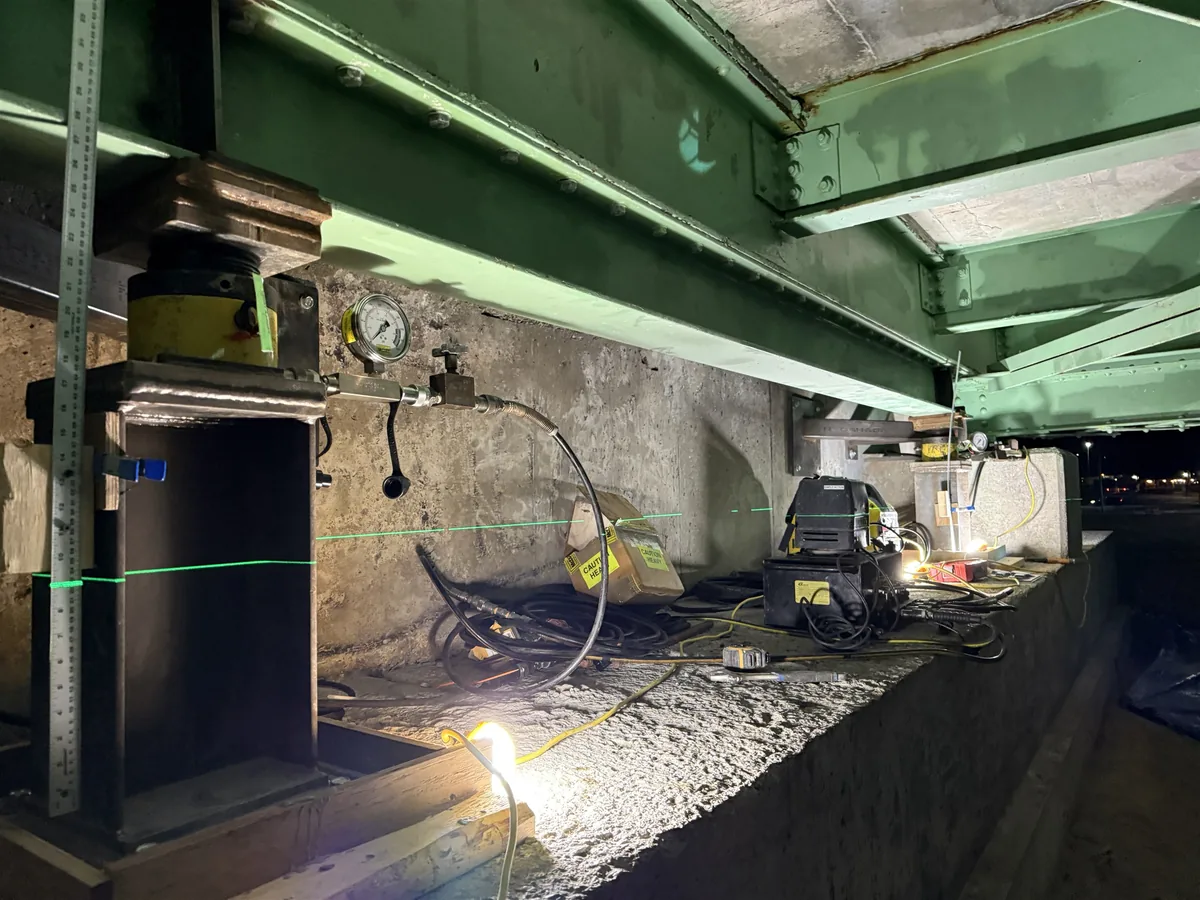
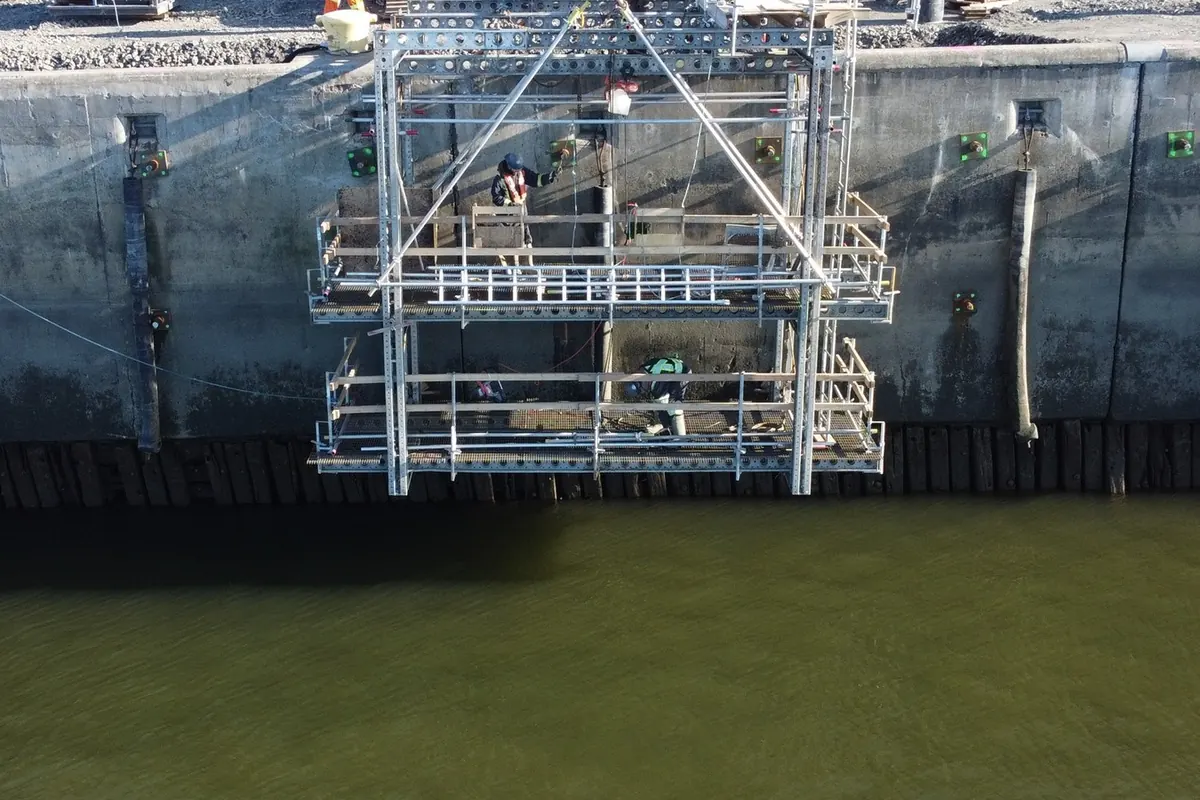
Temporary supports — Bents and provisional supports receiving the deck between installation and final bearing.
Site follow-up — Attendance at the governing stages and certificates of conformity.
Why we are proud of it
The choice of method is not settled on the structure, it is settled beneath it. Launching brings a deck into place without mobilising a crane under the span, at the cost of pushing supports and stage-by-stage monitoring. A lift is faster, but it requires the interruption window and the bearing capacity to receive the crane.
Selecting the right method structure by structure, rather than applying the same one twice, is where the difference in cost and schedule is decided for the contractor.
Thanks to Hamel Construction and the teams involved.