Emergency work on the Shannon heritage bridge
The challenge
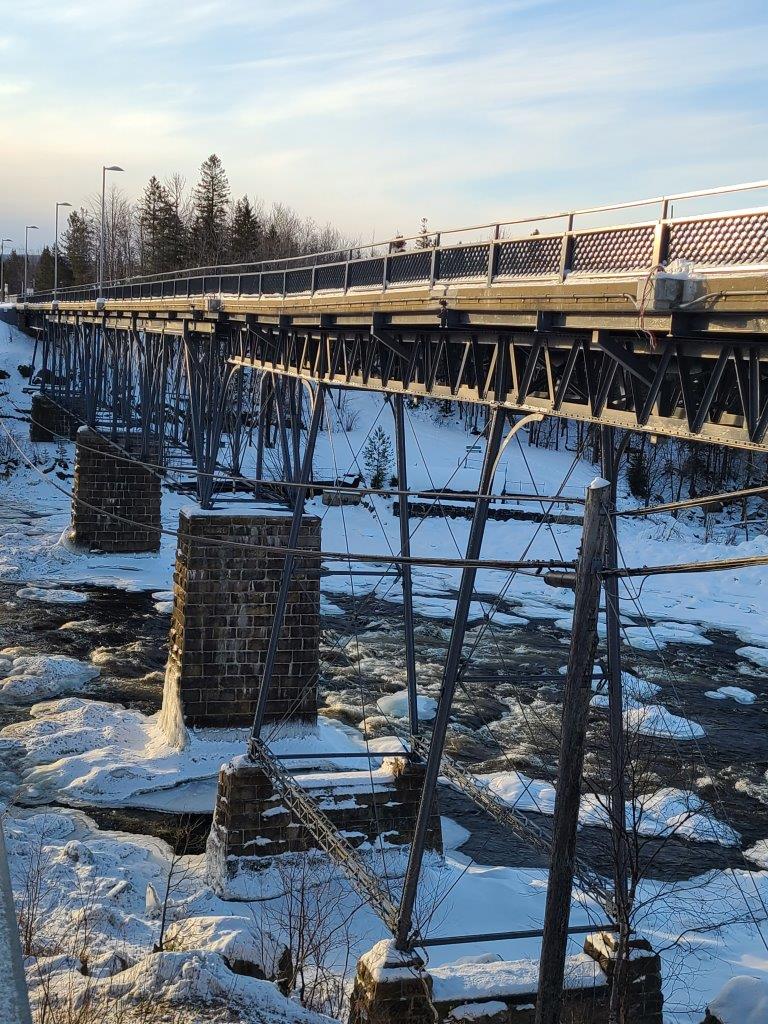
A structure assessed as being at high risk of collapse, to be stabilized without anyone bearing on it. The work required three workers in immediate proximity to the structure, on a timeline measured in days.
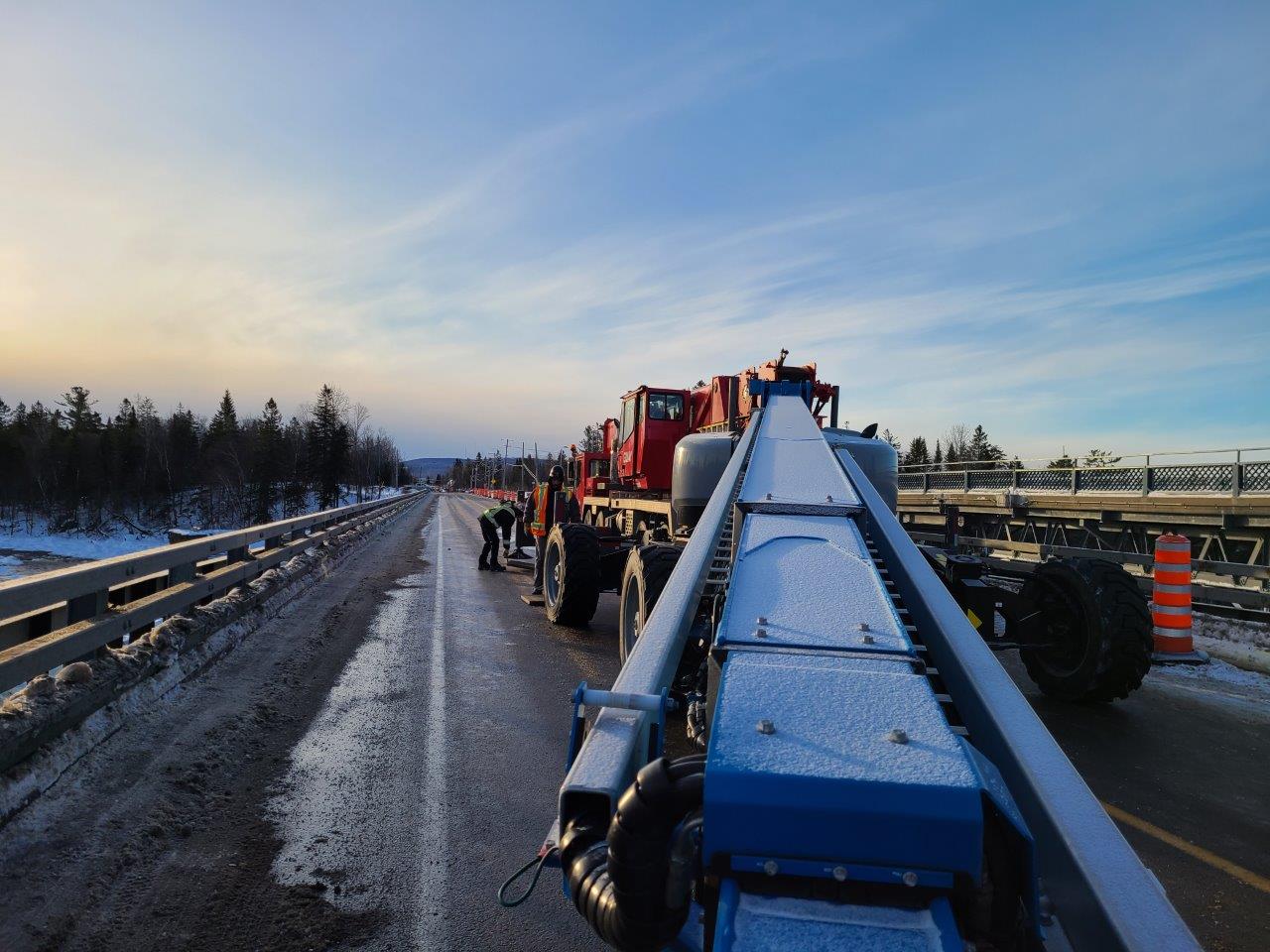
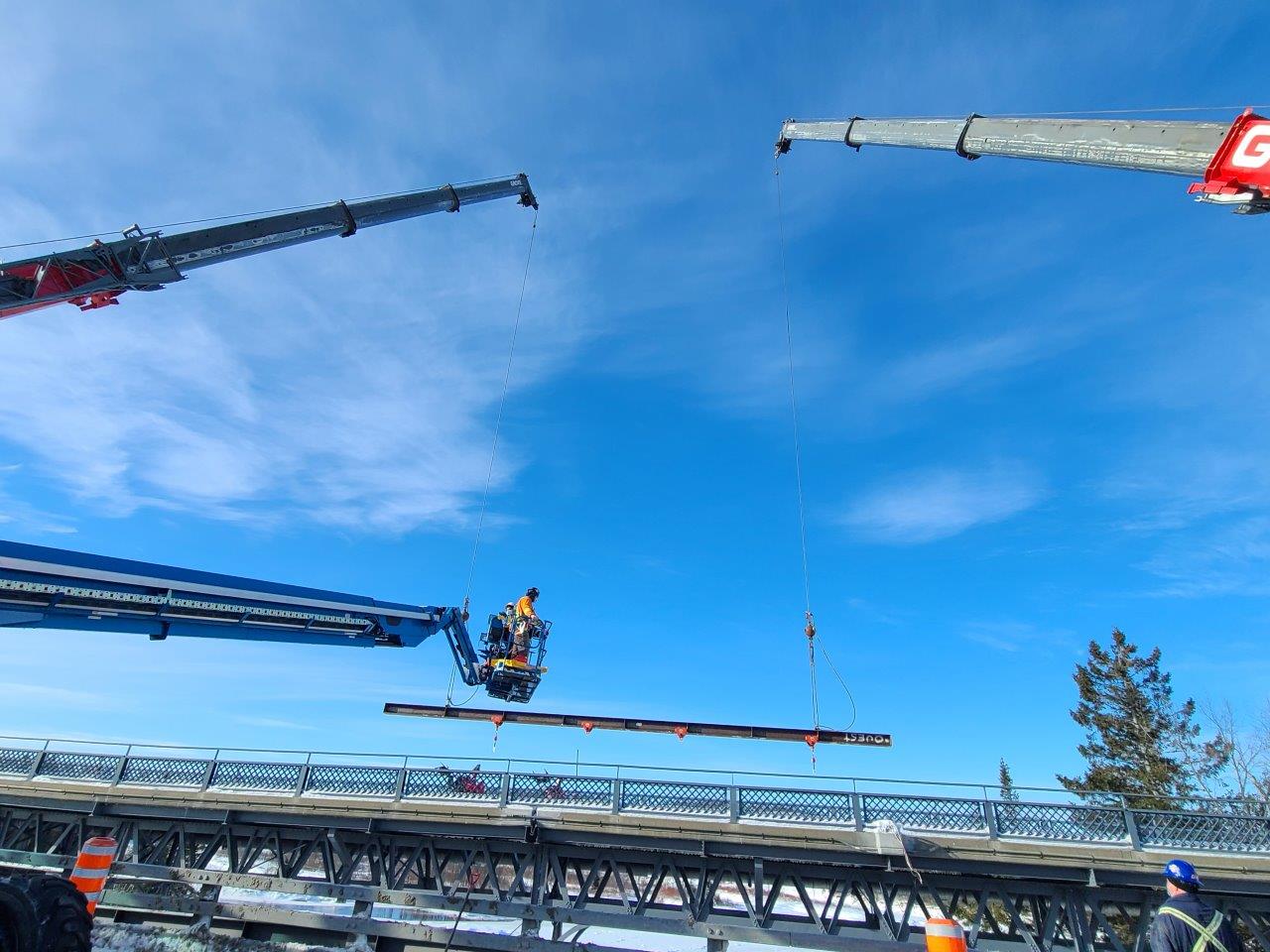
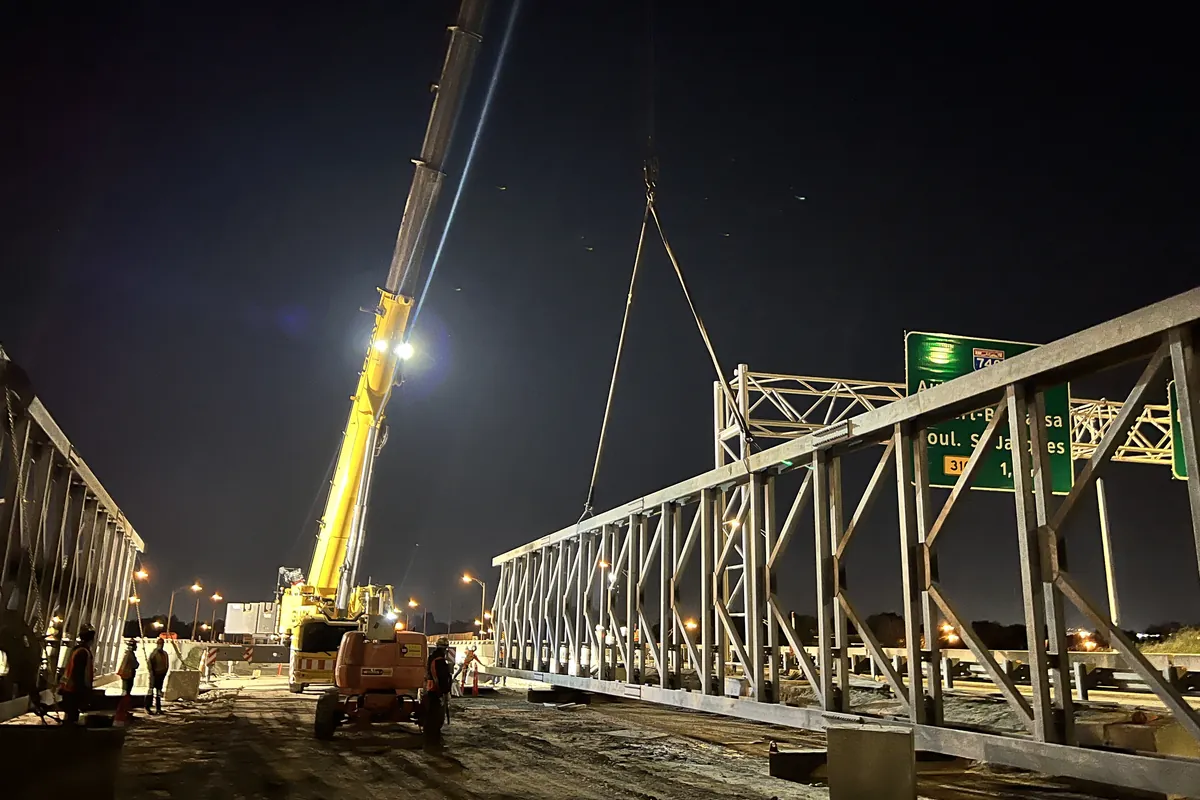
The mandate therefore turned on the installation: getting the support beam, designed by the Ministry, into its final position by crane, and getting the workers to it safely. Two weeks passed between the initial survey and the installation of the reinforcing beam.
Main services provided
Installation of the support beam — Method and drawings for installing the reinforcing beam, which was designed by the Ministry from a WWF 1100×234 section.
Analysis of the bridge suspension — Verification of the bridge’s suspension system in support of the stabilization method.
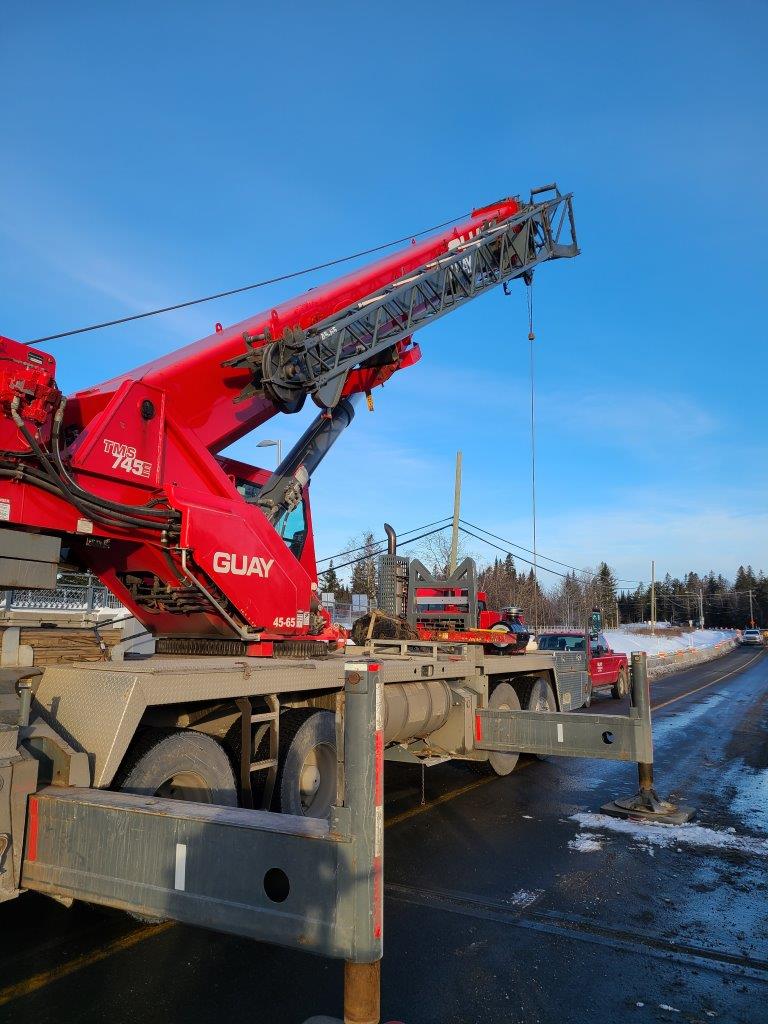
45 t lifting procedure — Lift plan for a Grove TMS 745E truck-mounted telescopic crane, 110 ft boom and 16,500 lb counterweight, with the corresponding ground reactions.
350 t lifting procedure — Lift plan for a Grove GMK 6350 / GMK 6300L crane, detailed position by position: crane assembly, rotation, initial and final positions, each with its own reactions.
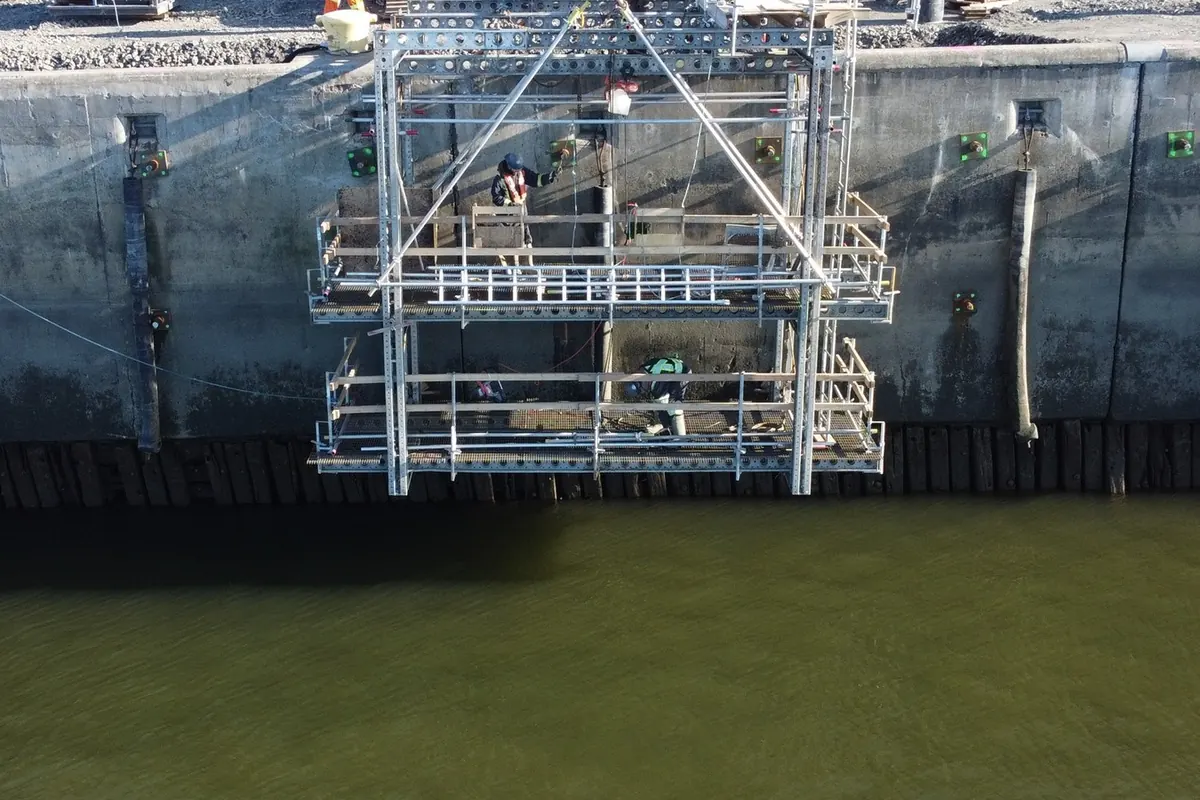
Working at height — Coordination of the procedure allowing workers to operate from the beam, lifeline arrangements included, with the crane operator and the contractor.
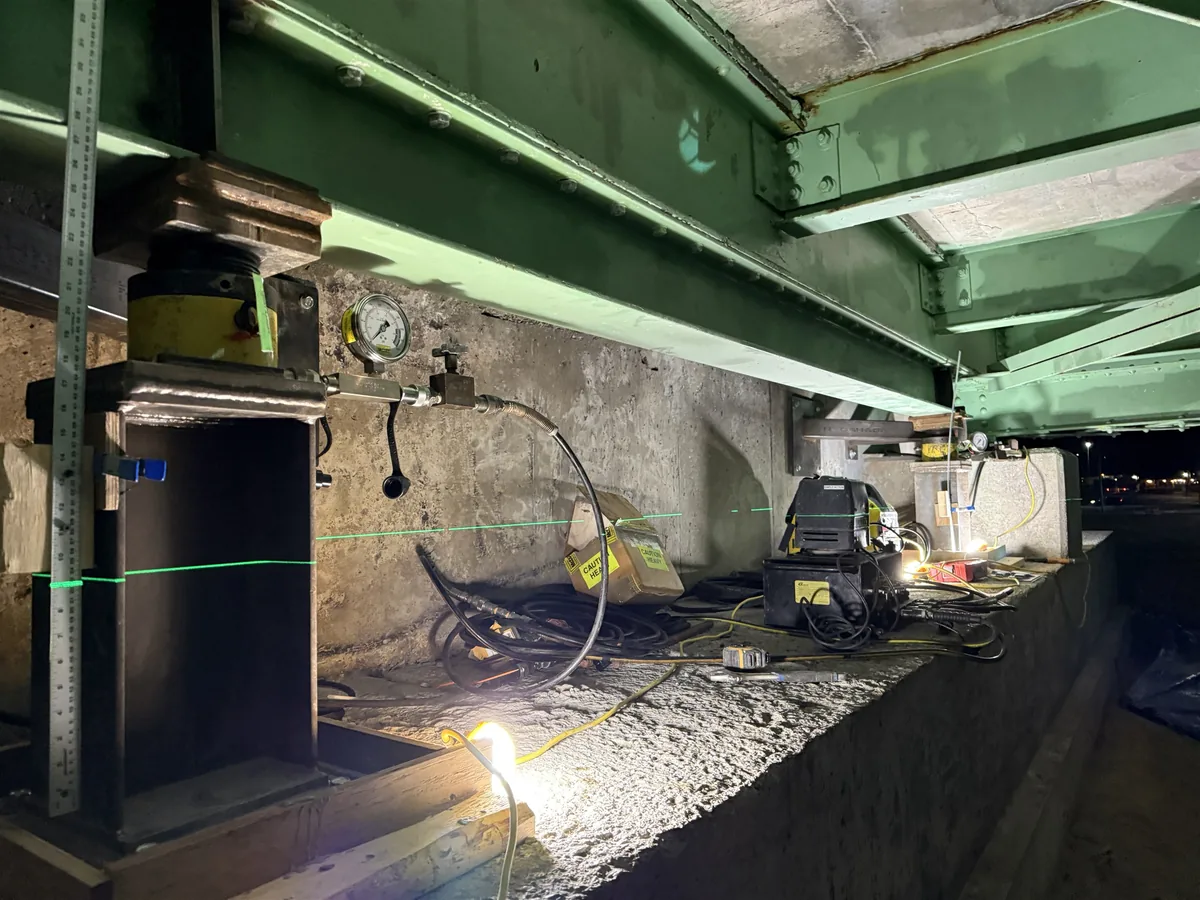
Load test — Verification by load test before the device was put into final service.
Site supervision and certification — On-site presence during installation, certificate of conformity, then follow-up through to final approval of the 350 t lift.
Why we are proud of it
Urgency does not change the requirements, it changes the time available to meet them. Two weeks separated the first survey from the installation of the reinforcing beam: drawings issued and revised, crane reactions transmitted, technical opinions obtained, certification done on site.
A heritage structure cannot be replaced. Stabilizing it in time is what keeps it.
Thanks to Parko.